
Species Overview
Corn snakes became popular in the hobby through a familiar arc: early availability as hardy wild-caught imports/collecting-era animals, followed by a major shift toward reliable captive breeding. As reptile keeping expanded in the U.S. through the latter 20th century, corn snakes stood out because they were comparatively easy to house, generally calm, and bred well in captivity—traits that helped them become a “foundation species” for many keepers and breeders. By the 1970s and 1980s, captive breeding had largely replaced wild collections, helping establish the corn snake as a cornerstone species in the developing reptile industry and one of the first snakes commonly recommended to new keepers.
A major turning point in corn snake history came with the discovery of color and pattern mutations. The first widely recognized morph—amelanism, commonly called “albino”—was collected from the wild in the 1950s and later proven to be a recessive genetic trait. This discovery sparked intense interest in selective breeding and laid the groundwork for modern corn snake genetics. Over the following decades, additional mutations affecting color, pattern, and scale structure were identified, combined, and refined. What began with a single color mutation eventually grew into one of the most genetically diverse snake species in captivity.
Corn Snake
Pantherophis guttatus
Pre-1900s
Corn snakes live alongside human agriculture in the southeastern United States, earning their name from frequent sightings around corn fields and barns where they hunted rodents.
1953–1959
The first amelanistic (albino) corn snake is collected from the wild and later proven to be a heritable genetic trait. This discovery marks the beginning of selective color breeding in the species.
1960s–1970s
Early captive breeding becomes more common. Corn snakes gain popularity as hardy, manageable native snakes suitable for captivity.
1980s–1990s
The reptile hobby expands rapidly. Additional color and pattern mutations are identified, and corn snakes become one of the first widely available captive-bred pet snakes in the United States.
2000s
Selective breeding accelerates. Complex morph combinations and refined lines emerge, and corn snakes become a staple species for both beginners and experienced breeders.
2010s
Online marketplaces and improved record-keeping help standardize morph naming and genetics. Corn snakes are produced globally, with hundreds of recognized morphs and combinations.
Morphs at TWB
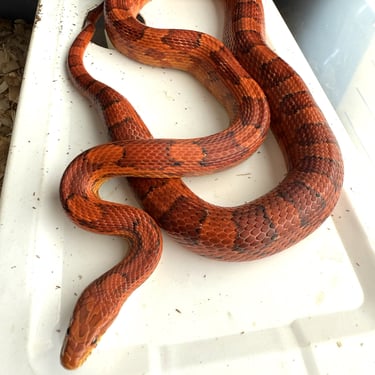
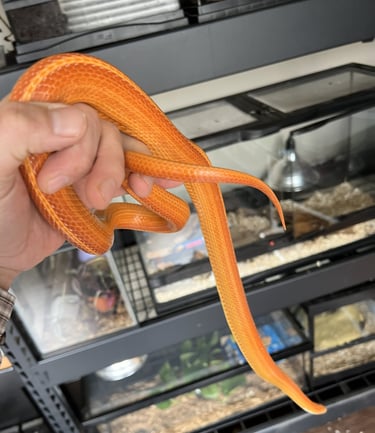
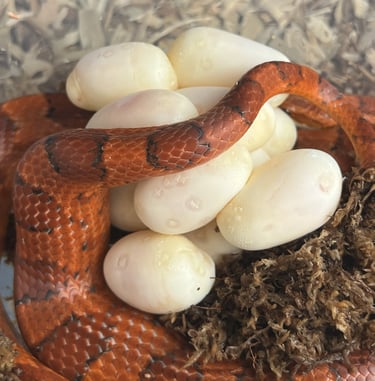
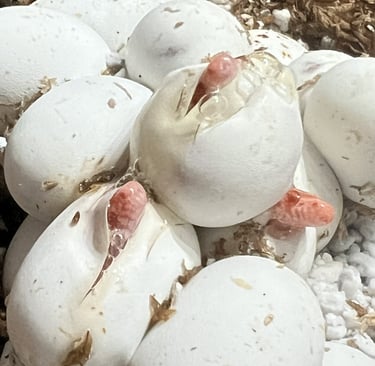
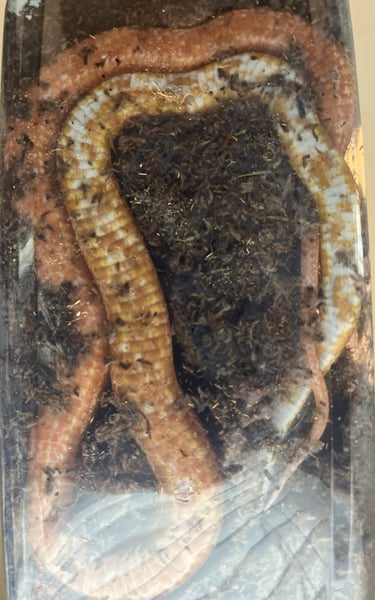
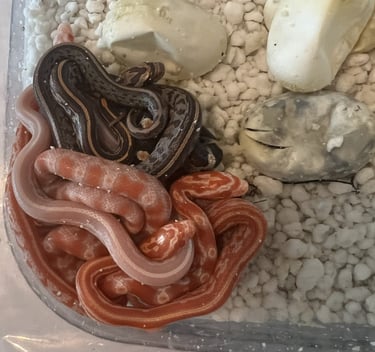
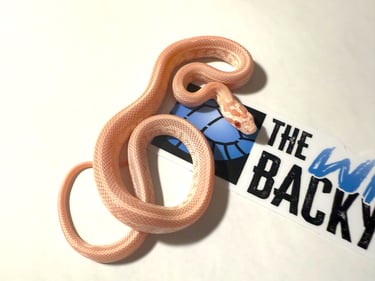
Below are images of the genetics we are working with at The Wild Backyard.
Reach out for questions or collaborations
twbreptiles@gmail.com
© 2024. All rights reserved.